Raising Future-Ready Children: Why Psychotherapy and the Arts Matter in an AI-Driven World
"Preparing children with emotional intelligence, creativity, and human insight for careers that evolve alongside AI—not behind it"
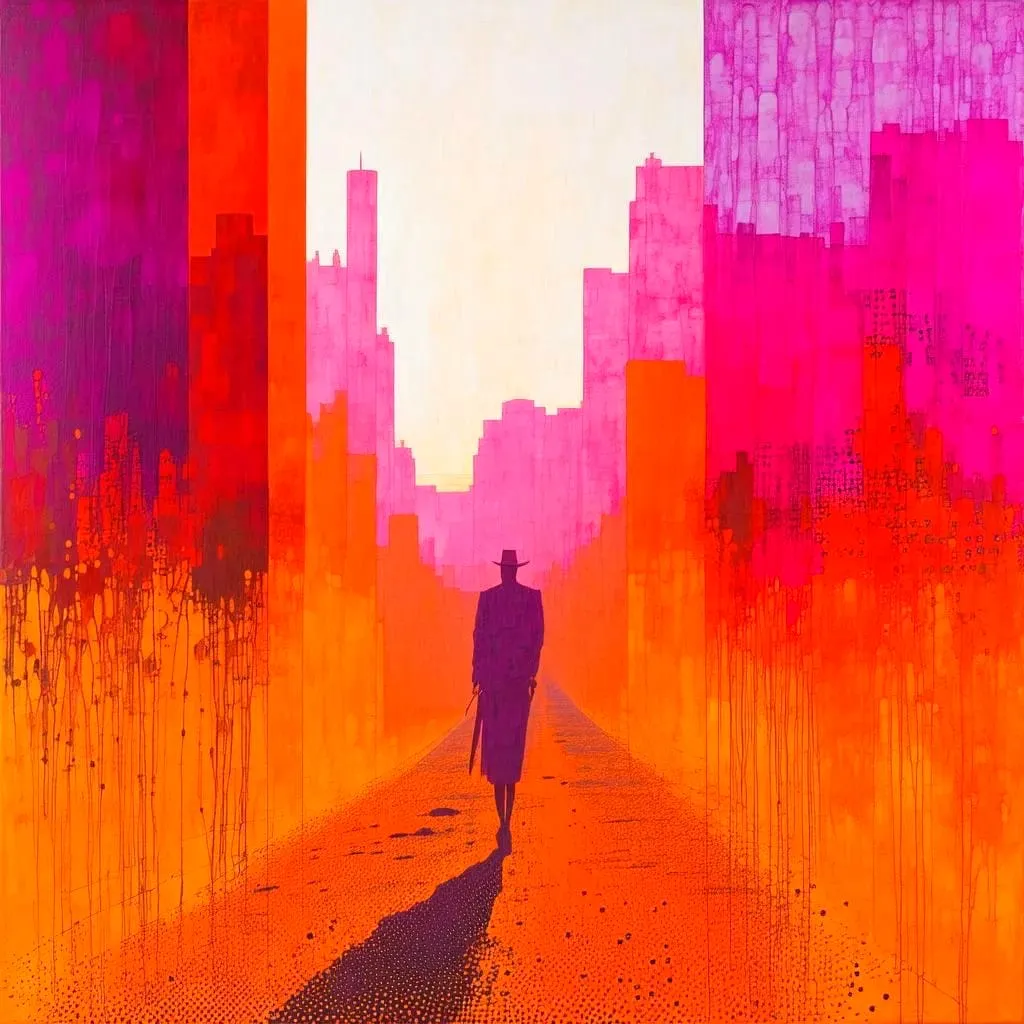
Parents today are navigating something unprecedented. Artificial intelligence (AI) is no longer a distant concept—it is already reshaping the job market. The real question is not whether AI will change careers, but how it will do so, and what that means for children currently in school.
This article separates hype from reality and focuses on what credible research shows: which careers are likely to remain resilient, and which new opportunities AI itself is creating.
What AI Actually Replaces (and What It Doesn’t)
AI is highly effective at tasks that are:
- Repetitive
- Predictable
- Data-driven
- Rule-based
This is why roles like administrative work, data entry, and some forms of analysis are increasingly exposed. Recent labour reports show that knowledge-based, routine office jobs are among the most affected by AI systems.
However, this does not mean entire professions disappear. In most cases, AI automates tasks, not whole jobs. Research shows the more likely outcome is job redesign—where humans focus on higher-level thinking while AI handles routine work.
Careers That Are Likely to Remain Human-Centred
Across multiple studies, a consistent pattern emerges: careers are safer when they rely on human qualities AI cannot replicate well.
1. Human Interaction and Emotional Intelligence
Examples:
- Psychologists and therapists
- Teachers
- Social workers
- Healthcare providers
These roles depend on empathy, trust, and nuanced communication. AI can assist, but it cannot replace genuine human connection.
2. Hands-On and Skilled Trades
Examples:
- Electricians
- Plumbers
- Mechanics
- Construction professionals
These jobs require physical adaptability and problem-solving in unpredictable environments—areas where AI and robotics still struggle.
3. Leadership and Complex Decision-Making
Examples:
- Managers
- Entrepreneurs
- Legal professionals
- Executives
These roles involve accountability, ethical judgment, and strategic thinking—capabilities that remain human-led.
4. Creative and Strategic Work
Examples:
- Designers
- Creative directors
- Brand strategists
- Innovation specialists
While AI can generate content, deciding what matters, why it matters, and how it connects to people remains a human strength.
The Key Insight for Parents
The safest careers are not defined by job titles—they are defined by skills:
- Critical thinking
- Emotional intelligence
- Creativity
- Adaptability
- Real-world problem-solving
Careers built on these foundations are far more resilient than those built on routine output.
New Careers Being Created by AI
AI is not just removing tasks—it is generating entirely new career paths. Many of these did not exist a decade ago.
1. AI Development and Engineering
- Machine learning engineers
- AI systems developers
- Robotics specialists
These roles build and maintain the systems shaping the future.
2. AI Ethics and Governance
- AI ethics officers
- Policy advisors
- Responsible AI specialists
As AI becomes more powerful, organisations need professionals who ensure it is used safely and fairly. Real-world examples already show professionals transitioning into these roles across industries.
3. Human–AI Collaboration Roles
- AI product managers
- Workflow designers
- AI integration consultants
These professionals focus on how humans and AI work together effectively.
4. Data and Insight Specialists
- Data analysts (advanced, not routine)
- Decision intelligence experts
While basic data processing is automated, interpreting complex data in context remains valuable.
5. Education and Reskilling Specialists
- Digital learning designers
- Workforce retraining experts
As AI reshapes industries, helping people adapt becomes a major field in itself.
A Reality Check: No Career Is Completely “Safe”
It is important to avoid false certainty. Research consistently shows that:
- Nearly all jobs will be affected in some way
- Some tasks within every role will be automated
- New skills will be required across all industries
Even traditionally “safe” roles will evolve. The difference lies in how much they change—not whether they change at all.
What Parents Should Focus On Now
Instead of steering children toward specific job titles, a more effective strategy is to build future-proof capabilities:
1. Encourage Problem-Solving Over Memorisation
AI already outperforms humans in storing and retrieving information. What matters now is how children use knowledge.
2. Develop Social and Emotional Skills
Careers that involve trust, communication, and relationships are far more resistant to automation.
3. Build Digital Literacy—Not Just Usage
Children should understand how AI works at a basic level, not just use apps passively.
4. Promote Adaptability
The career your child starts in may not exist in its current form in 10–15 years. Flexibility is no longer optional.
5. Blend Technical and Human Skills
The most valuable future professionals will combine:
- Technical understanding of AI
- Human-centred thinking
Final Perspective
The future of work is not a competition between humans and AI. It is a shift toward collaboration.
Children entering the workforce will not be replaced by AI if they are equipped to:
- Think critically
- Relate to people
- Solve complex, real-world problems
- Work with intelligent systems rather than against them
The most important decision is not choosing a “safe” career. It is raising a child who can adapt faster than the world changes.
"It allows the brain to “make sense” of experiences that were previously unprocessed"

Stress Reduction and the Cortisol Response
One of the most immediate and measurable effects of visual expression is a reduction in stress. Studies consistently show that engaging in creative activity lowers cortisol, the hormone associated with stress. What makes this particularly significant is that the effect does not depend on skill level. People who do not consider themselves “artistic” experience the same physiological shift.
This is partly due to attention. When someone becomes absorbed in a creative task, the brain enters a state often referred to as “flow.” In this state, attention narrows, external stressors recede, and the nervous system begins to regulate. Heart rate slows. Breathing deepens. The body shifts out of a chronic alert state.
This is not avoidance. It is regulation. The brain is given a structured way to settle itself without needing to verbally process or “solve” anything.
Dopamine and the Reward System
Creative expression also activates the brain’s reward system. When you make something—whether it is a detailed painting or a simple sketch—the brain releases dopamine. This neurotransmitter is associated with motivation, pleasure, and reinforcement of behaviour.
Importantly, dopamine is not only released at the end result. It is released throughout the process: choosing colours, making marks, seeing an image take shape. This ongoing feedback loop encourages continued engagement and can counteract patterns of withdrawal or low motivation often seen in stress, burnout, or low mood.
This is one reason creative practices can become self-sustaining. The brain begins to associate the act of creating with a sense of reward, making it easier to return to over time.
Accessing Emotion Without Words
Not all experiences are easily verbalised. This is particularly true for complex emotions, early memories, or overwhelming events. The brain does not store all experiences in language. Many are stored in sensory and emotional form—images, sensations, fragments.
Visual expression provides a direct route into these non-verbal layers. Instead of needing to explain or justify an experience, a person can externalise it through colour, shape, and form. This shifts the experience from internal to external, where it can be observed rather than simply felt.
Neurologically, this engages both hemispheres of the brain. The right hemisphere, often associated with imagery and emotion, becomes active during creation. The left hemisphere, responsible for structure and meaning, can then begin to organise and interpret what has been expressed. This integration is key to processing.
It allows the brain to “make sense” of experiences that were previously unprocessed.
Regulation Through Repetition and Rhythm
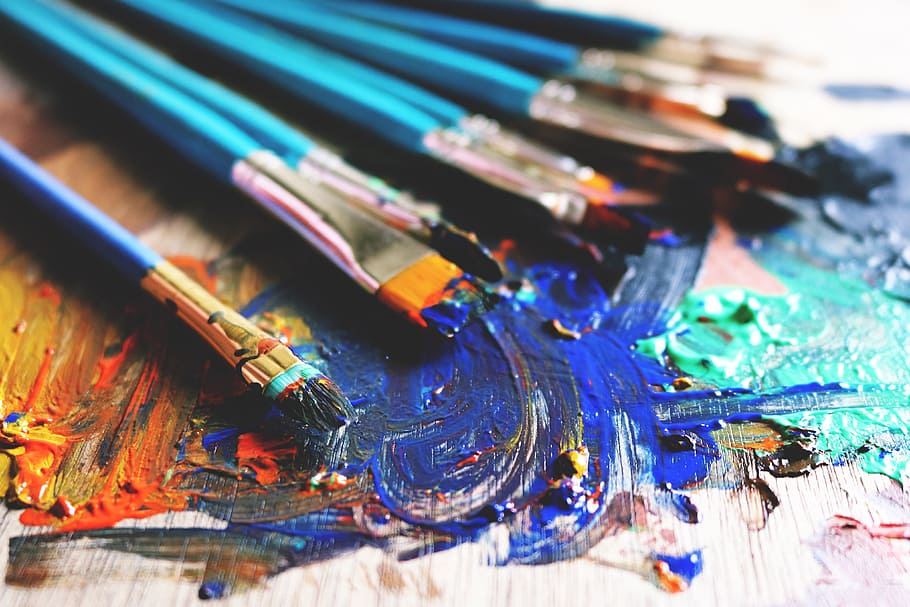
There is also a regulating effect in the physical act of creating. Repetitive movements—such as shading, pattern-making, or brush strokes—have a stabilising impact on the nervous system. These movements create rhythm, and rhythm is inherently regulating for the brain.
This is similar to how activities like walking, knitting, or even breathing exercises work. The predictability of the movement signals safety to the nervous system. Over time, this can reduce hyperarousal (feeling constantly on edge) or hypoarousal (feeling numb or disconnected).
Creative work, then, becomes more than expression. It becomes a tool for bringing the nervous system back into balance.
"It allows the brain to “make sense” of experiences that were previously unprocessed"
Shifting Perspective and Cognitive Processing
Another key effect of visual expression is the ability to shift perspective. When an internal experience is turned into an external image, it can be seen from a distance. This creates psychological space.
From a brain perspective, this engages higher-order cognitive processes. The prefrontal cortex can step in to reflect, reinterpret, and reorganise the experience. Instead of being overwhelmed by a feeling, the person can begin to interact with it.
For example, changing an image—adding to it, altering it, even destroying it—can shift how the brain encodes the original experience. This is not symbolic in a superficial sense. It is a real-time update to how the brain stores and responds to that information.
Why It Matters for Everyday Life
The effects described are not limited to clinical settings. They are relevant to anyone navigating stress, change, or the general demands of daily life. Modern environments often prioritise constant input—information, screens, conversation—while offering very little opportunity for output that is not performance-based.
Visual expression provides a different kind of output. It is non-linear, non-judgemental, and process-driven. This makes it accessible. It does not require training, and it does not depend on producing something “good.”
What matters is engagement.
Even short periods of creative activity—15 to 30 minutes—can shift physiological and cognitive states. Over time, this can build resilience, improve emotional regulation, and support clearer thinking.
Moving Beyond the Myth of Talent
A common barrier is the belief that art requires talent. From a brain-based perspective, this is largely irrelevant. The benefits of visual expression come from the act itself, not the outcome.
In fact, focusing too heavily on outcome can reduce the neurological benefits. It shifts activity back into performance and evaluation, activating stress responses rather than regulating them.
The more useful approach is to treat creative activity as a process. Experimentation, imperfection, and even “mistakes” are part of what drives neuroplastic change. The brain learns through variation, not precision alone.
A Practical Entry Point
For those unfamiliar with creative practices, starting does not need to be complex. Simple materials—paper and a pen, a pencil, or basic paints—are enough. The focus should be on engagement rather than technique.
Some accessible starting points include:
- Drawing without lifting the pen from the page
- Filling a page with repeated patterns or shapes
- Using colour to represent a current mood without trying to depict anything specific
- Creating abstract marks in response to music
These approaches bypass the pressure to “get it right” and allow the brain to engage more freely.
Closing Perspective
Visual expression is not separate from how the brain functions. It is one of the ways the brain regulates, processes, and adapts. When people engage in creative activity, they are not simply making art—they are actively influencing their neurochemistry, their stress response, and their capacity to process experience.
This reframes art from something optional to something functional.
The question is not whether someone is “good at art.” The more relevant question is whether they are giving their brain the opportunity to do what it is designed to do: create, adapt, and reorganise through experience.
References
- Kaimal, G., Ray, K., & Muniz, J. (2016). Reduction of cortisol levels and participants’ responses following art making. Art Therapy: Journal of the American Art Therapy Association, 33(2), 74–80.
- Bolwerk, A., Mack-Andrick, J., Lang, F. R., Dörfler, A., & Maihöfner, C. (2014). How art changes your brain: Differential effects of visual art production and cognitive art evaluation on functional brain connectivity. PLOS ONE, 9(7), e101035.
- Malchiodi, C. A. (2012). Handbook of Art Therapy (2nd ed.). Guilford Press.
- Csikszentmihalyi, M. (1990). Flow: The Psychology of Optimal Experience. Harper & Row.
- Hass-Cohen, N., & Carr, R. (2008). Art Therapy and Clinical Neuroscience. Jessica Kingsley Publishers.
" Visual art reframes art making from something optional to something functional"